Heritage houses
Matchbox houses (maisons allumettes): keeping the character of their double-hung windows
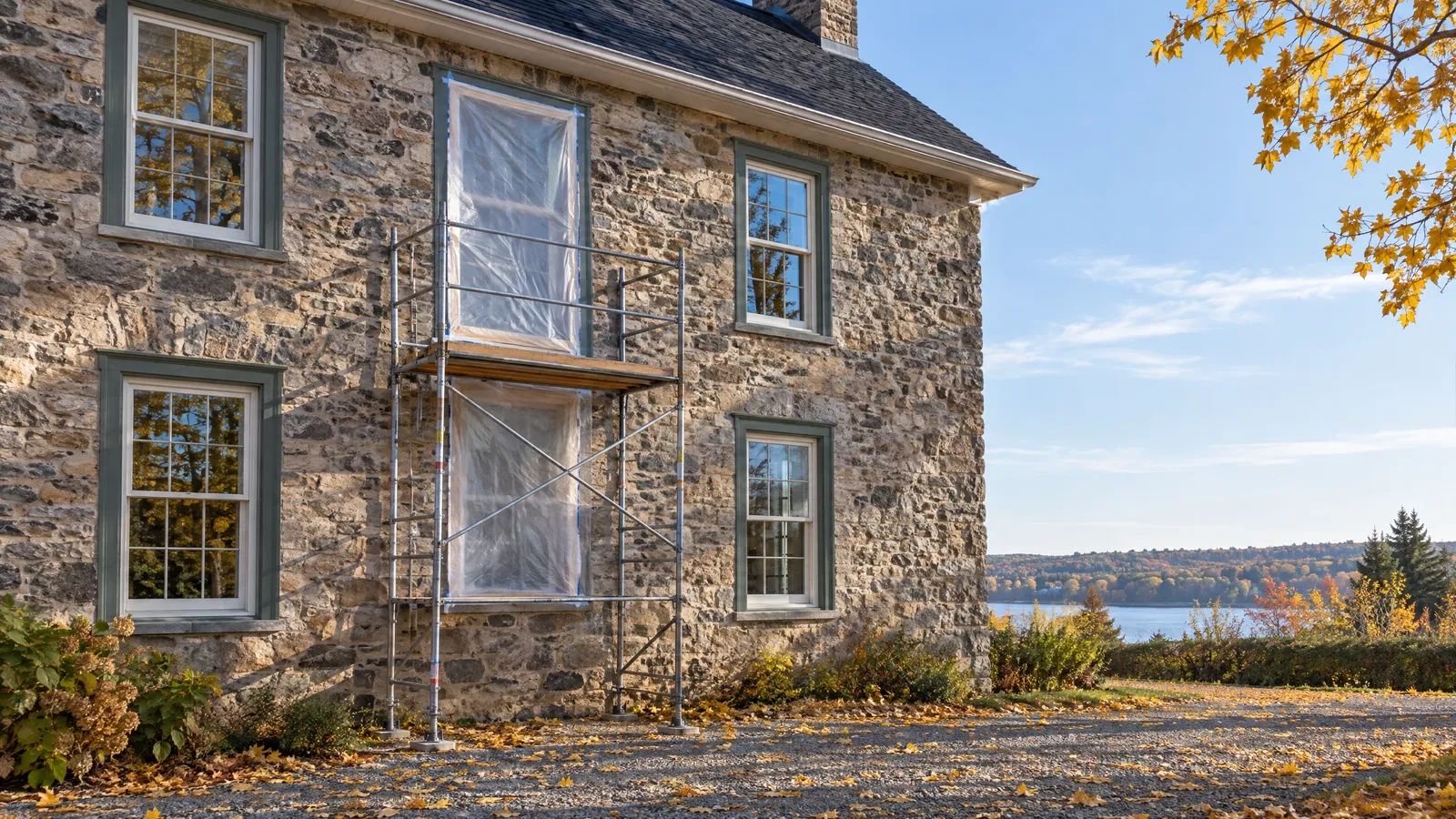
The maison allumette, Gatineau's narrow gable-front house, was built with vertical double-hung windows, most often with four panes. The Ville de Gatineau's architectural sheet asks owners to keep that: double-hung models, the same pane pattern, the same openings and original materials. Restoring the existing wood windows comes first where it's possible. On a cited heritage site or in a PIIA sector, council approves certain changes before work begins, and a City heritage program due to reopen in fall 2026 can help restore openings on eligible buildings.
What is a matchbox house?
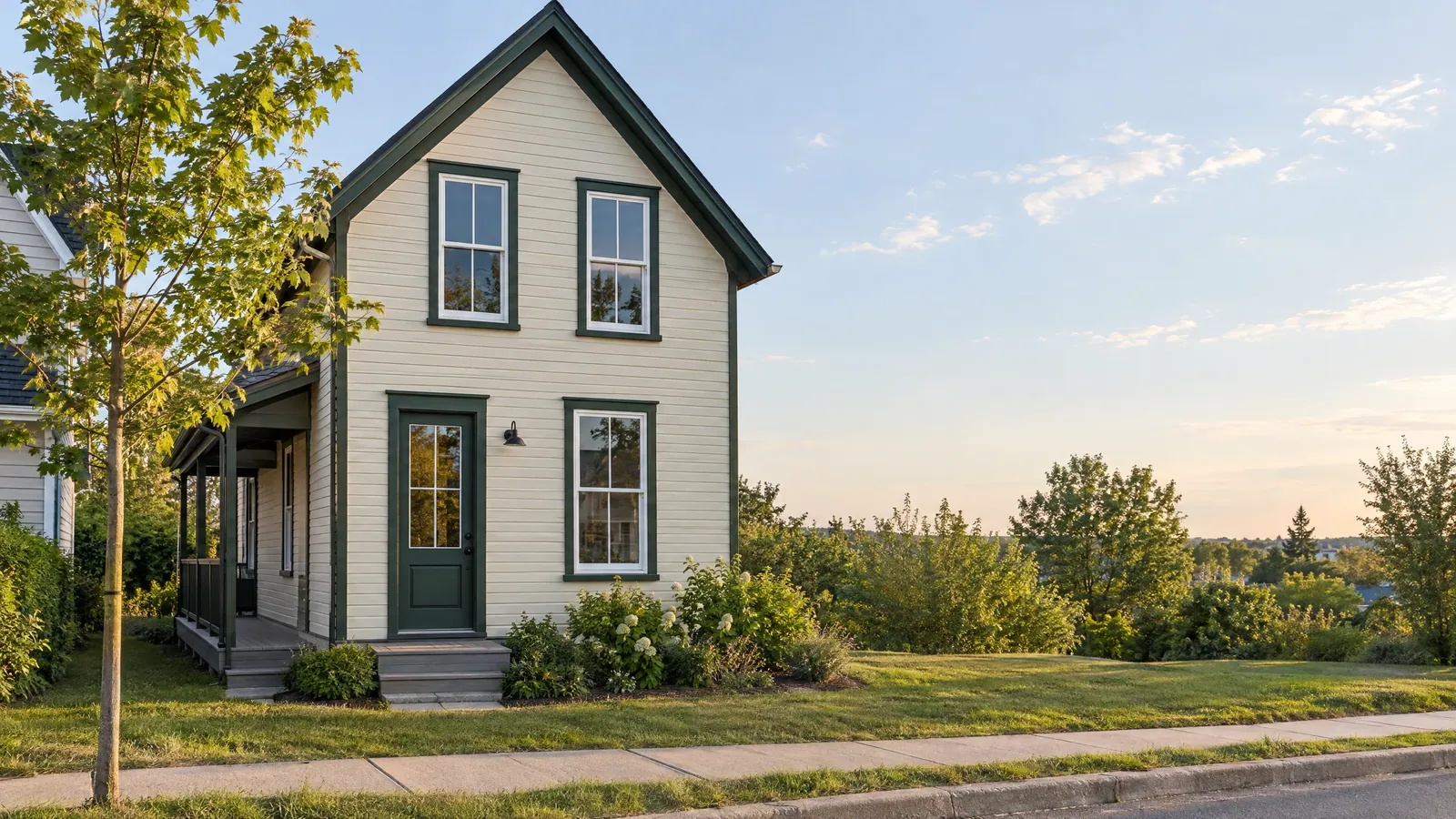
Walk the older streets of Hull and you'll pass them: narrow houses, often two storeys, with a steep gable facing the street and the front door set to one side. The Ville de Gatineau's architectural sheet dates them mainly from 1850 to 1950, concentrated in Hull and Aylmer, with fewer in Buckingham. The Jacques-Cartier heritage site in Pointe-Gatineau has them too, as workers' houses with their gable ends to the street.
Their shape comes from the land. When the Wright family's holdings in Hull were subdivided in 1864, the lots were long and narrow, so builders turned the house a quarter-turn and put the gable on the street. American pattern books shaped the rest from the 1870s on.
The name is younger than the houses. According to Réseau Patrimoine, "maison allumette" only came into use in the 1980s, a nod both to the match-factory workers of Hull and to how quickly a narrow wood house could burn. Earlier residents called them maisons en bois Papillon, after Georges Papillon, who sold affordable lumber packages after 1900. The Hull sector page covers the streets around them.
After the great fire of 1900: brick and rebuilding
On 26 April 1900, a fire that began in Hull destroyed a large part of the town and left thousands without a home. Rebuilding came quickly, and it changed the matchbox house. With rules now calling for fire-resistant cladding, brick versions multiplied. Many of the houses that stand in Vieux-Hull today date from that rebuilding, some in brick, some still in wood.
Fewer remain than once stood. Hull went through repeated fires in the decades around 1900, and in the 1970s large federal office complexes replaced much of the old commercial core, displacing residents and businesses. What survives is concentrated enough to matter, and the City treats it that way.
The original windows: double-hung sash, panes and mouldings
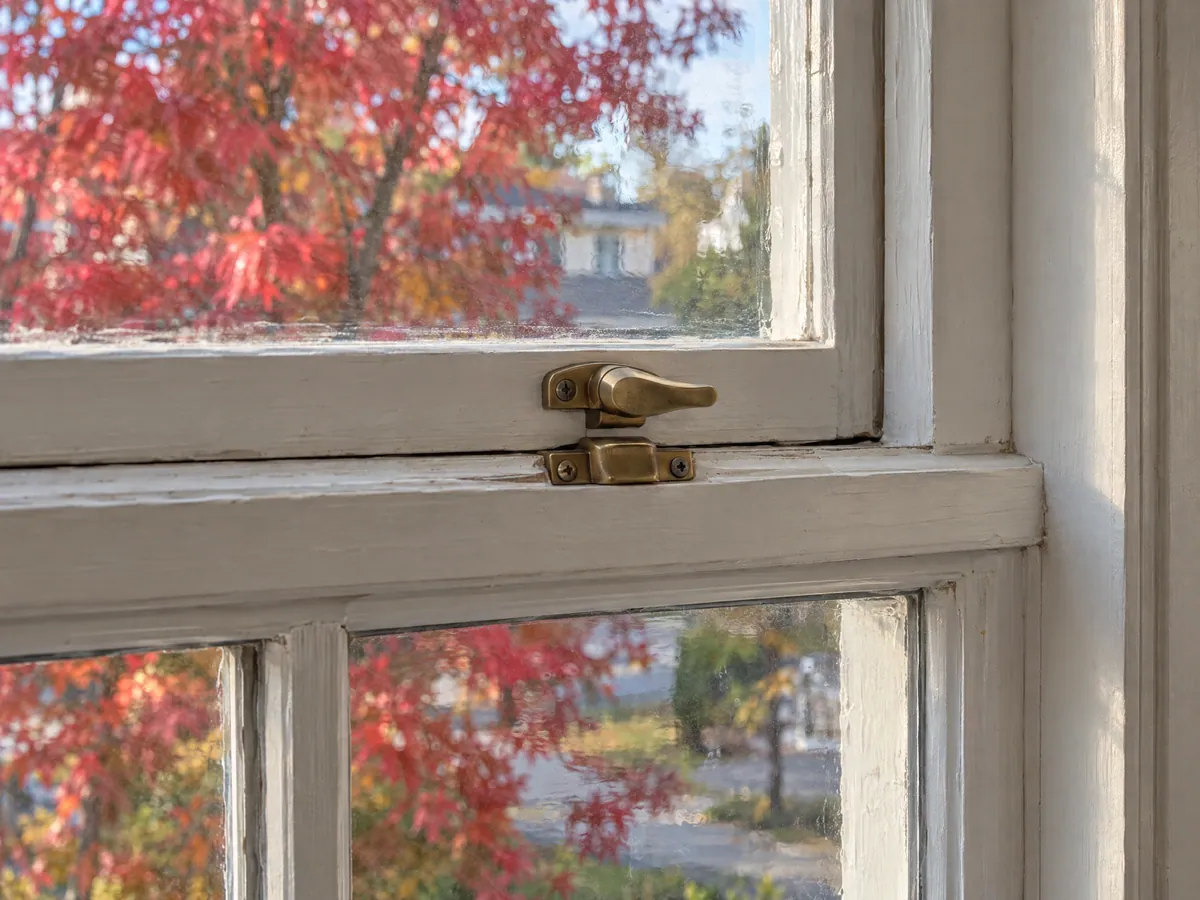
The City's sheet is precise about them. The original windows are mostly vertical double-hung units, fenêtres à guillotine, where the lower sash slides up past the upper one. Wood mouldings frame them on the outside: the Réseau Patrimoine record for 57 rue de Lanaudière, built in 1895 and rebuilt after the fire, describes exactly that.
Four, six, nine or twelve panes
The panes, carreaux, follow a short list of patterns. Four is frequent, twelve occasional, six and nine rare. Count them on your own windows, and on a neighbour's if yours have already been changed: it is the pattern the City will expect to see again in any replacement.
The front door belongs to the same façade. On these houses it is simple, glazed and usually off-centre, so its glass and hardware deserve the same care as the windows.
What the City recommends when you replace
When restoration isn't possible, the architectural sheet sets out what a replacement should respect:
- Double-hung models (modèles à guillotine), not casements or any other type.
- The same pane count as the originals.
- The original openings, at their original dimensions.
- Original materials, rather than substitutes.
Two cautions. The sheet is written for the two-storey brick matchbox house; for a wood-clad one, ask the City which guidance applies before you order. And the sheet is guidance, while a PIIA sector or cited heritage site adds a formal approval step, described below. A pro who knows double-hung windows can tell you which models match and which only look close in a brochure.
Restore first, where it's possible
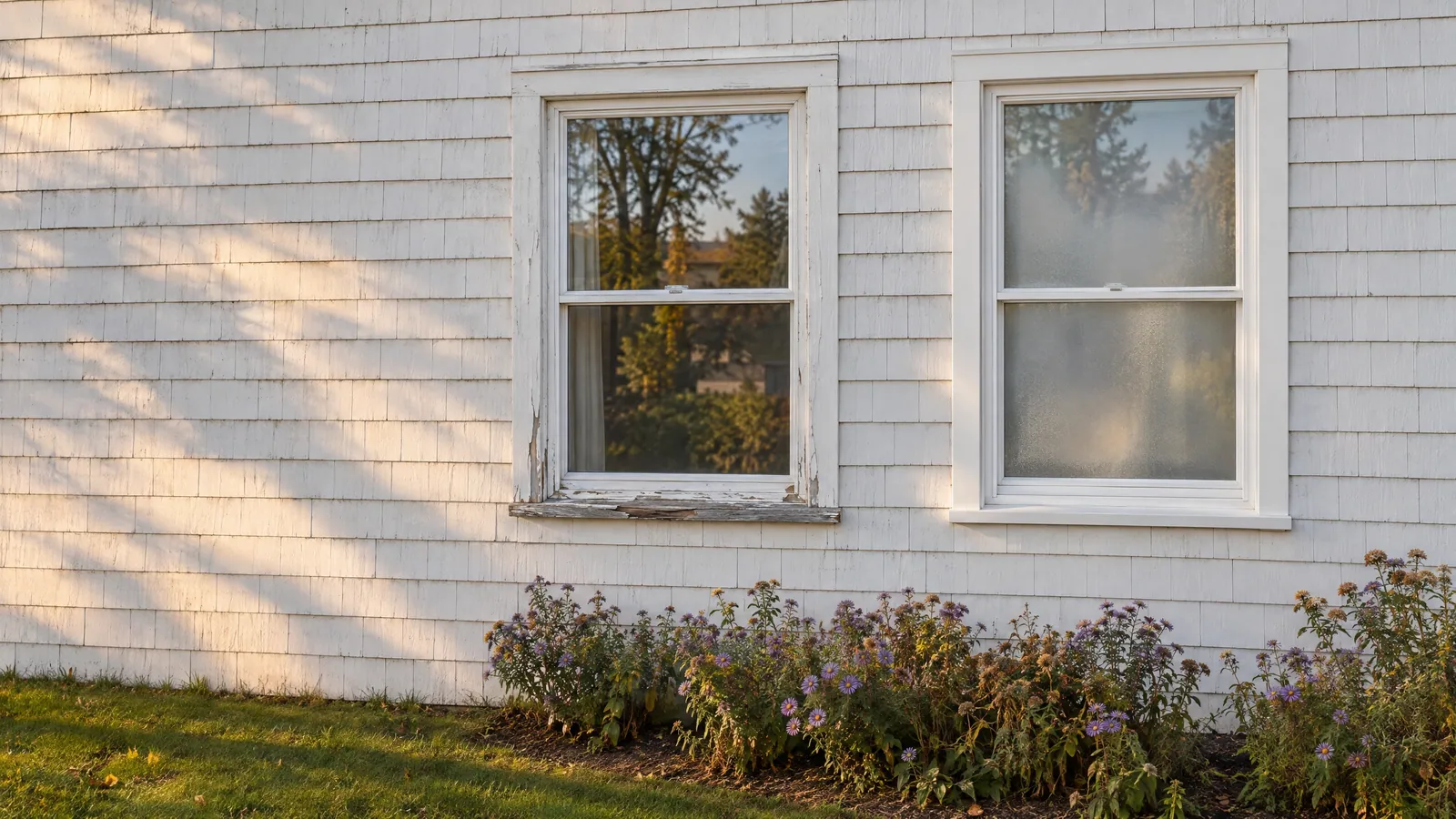
Old wood double-hung windows fail in predictable ways, and most of those failures can be repaired. Sashes painted shut can be freed. Broken cords or tired balances can be replaced so the sash stays where you leave it. Loose or missing glazing putty can be redone, cracked panes replaced one at a time, and soft spots in the wood consolidated or patched. Better weatherstripping, or a storm window, closes much of the draft people blame on the window itself.
Restoration keeps what the City's sheet is trying to protect: the original frame, sash and proportions. It is also the kind of work the City's heritage program is designed to support. When one sash is truly beyond saving, a pro can often rebuild that sash to match rather than replacing the whole window. Wood window repair describes the work in more detail.
Approvals: cited heritage sites and PIIA sectors
Gatineau has ten cited heritage sites, among them Kent-Aubry-Wright in Vieux-Hull, Jacques-Cartier in Pointe-Gatineau and the heritage core of Vieux-Aylmer, plus PIIA sectors where certain work needs council approval. The City's permit FAQ points owners to the Géoportail urbanisme, its online planning map, to see whether a property falls in either. Check before anyone quotes.
A PIIA request follows a set path, laid out in the City's PIIA leaflet:
- You apply, with the required documents and the fees.
- The City's planning service analyzes the request.
- The file goes to the Comité consultatif d'urbanisme (CCU).
- The CCU makes its recommendation to municipal council.
- Council votes.
- The permit is issued.
- The work begins.
The CCU advises; council decides. Photos of the existing windows, the pane count and a quote that describes the proposed work in detail make the file easier to read. The pro we connect you with can supply the quote and product details; the application itself is yours to file. Outside those sectors, the City's general permit rules still apply, and closing an opening or adding a new one needs a permit.
The heritage program for openings
The Ville de Gatineau's Programme d'aide financière pour la mise en valeur du patrimoine bâti (By-law 886-2021) names openings, windows and doors, among the work it supports, and funds their restoration at a higher rate than general consolidation work, up to a ceiling. Eligibility is building by building: the building must be listed in the by-law's annexes, which cover buildings with legal heritage status and those with strong or exceptional heritage value in a PIIA or PPU sector. When we checked in September 2026, the program was closed, with applications due to reopen in fall 2026. The rates and ceilings are on the City's page; confirm them there, since they can change.
Not every matchbox house qualifies, so check eligibility before planning around the money. The window subsidies guide explains how this program sits alongside the PRRG and Rénoclimat.
Finding a pro who knows these houses
A matchbox-house window is a particular job: old wood, heritage guidance, and a City that will look at the result. When you send a request, tell us it's a matchbox house, which sector it's in, and whether you know it sits in a heritage site or PIIA sector. Add a photo of the façade and a close-up of one window. We pass it to an independent, RBQ-licensed local glass professional who takes on wood and heritage work, and we follow up so you hear back. The pro will tell you, window by window, whether it's worth restoring or should be reproduced. Send your photos with a quote request.
Frequently asked questions
Why are they called matchbox houses?
The name points two ways: to the match-factory workers of Hull, and to how fast a narrow wood house could burn. It's a recent label, dating from the 1980s according to Réseau Patrimoine. Earlier residents called these houses maisons en bois Papillon, after Georges Papillon, who sold affordable lumber packages in the years after the 1900 fire.
Can a matchbox house have casement windows?
The City advises against it. Its architectural sheet for the matchbox house asks owners to choose double-hung models with the original pane count, and specifically not to substitute casements or any other type. On a cited heritage site or in a PIIA sector, a change like that would also go through the approval process. If easier operation is the goal, a restored, well-adjusted double-hung window is usually the answer.
Why are there fewer matchbox houses than there used to be?
Fire and redevelopment, mostly. Hull burned repeatedly in the decades around 1900, and the 1900 fire alone took a large part of the town. In the 1970s, federal office complexes replaced much of the old core, displacing residents and businesses. What remains is protected in part by the cited heritage sites, such as Kent-Aubry-Wright. The Hull page covers the streets where most survive.
Does the heritage program cover every matchbox house?
No. The City's built-heritage program supports restoring openings on eligible buildings, and it was due to reopen for applications in fall 2026, but eligibility depends on the building being listed in the program's by-law, not on its type alone. Check the annexes or ask the City. Rénoclimat can help with a complete ENERGY STAR replacement, but that replacement still has to respect the City's guidance for these houses.
Can I replace matchbox-house windows in Vieux-Hull with new PVC windows?
The City's guidance points the other way. Its sheet asks owners to keep original materials, along with double-hung models, the original pane count and the original openings. In a heritage site or PIIA sector, ask the City before choosing any new material. Before pricing vinyl, have a pro assess whether the wood windows can be restored. Vinyl windows explains where PVC is a good fit.
How many steps does a PIIA request take, and who decides?
The City's leaflet describes seven: the application with documents and fees, analysis by the planning service, referral to the Comité consultatif d'urbanisme, its recommendation to council, the council vote, the permit, then the work. The CCU advises and municipal council decides. We don't quote processing times, because the City says they vary with each file. Start early.